

Hope Centre
What began as a small property with one building in rural Uganda, our campus has now grown into an 11-acre space that is a safe haven for those coming to give birth and for the local Ugandan community.
Our mission is to be a place of refuge for those who need hope, and that through simply offering what have that we could make the world it a bit more kind, loving, and caring.
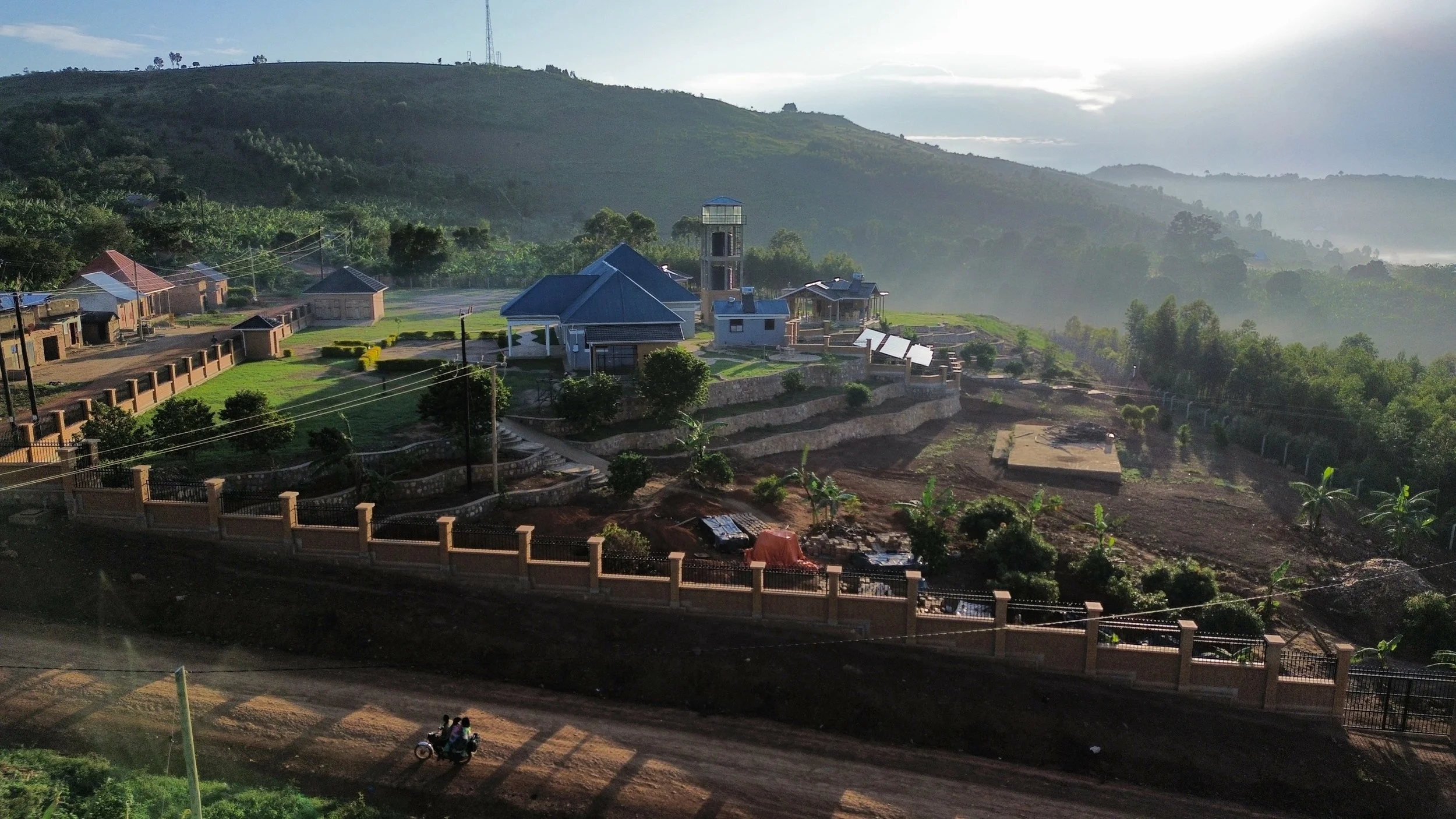
Creating a campus that prioritizes safety is something we take very seriously. Threats of damage to our property early on encouraged us to build a perimeter fence around our property to ensure that all who step foot onto the Hope Centre campus feel safe and well cared for.
The Birthplace
The Birthplace is where it all began. It was the first building at the Hope Centre and it now operates as the medical clinic. It has a delivery room, patient recovery rooms, several other medical rooms, and the west side of the building is the residential area for the midwife who lives on campus.
Banda Lodge
The Banda Lodge serves as the place Westerners stay when visiting the Hope Centre in Uganda. It was important to us that we provide clean, comfortable accommodations, so it includes comfortable beds, hot showers, and a Western toilet.
Pavilion
The pavilion is a versatile hub used for many things at the Hope Centre. The heart of the campus, this where the cooking, eating, and meeting take place. Whether teams are there or not, this space is used by the community as needed.
OUR CAMPUS
Covid taking the world by storm in 2020 was a blessing in disguise for Ray of Hope.
It stalled our medical assistance program, which gave us the opportunity to prayerfully consider the direction of Ray of Hope without the option of offering medical assistance at the time.
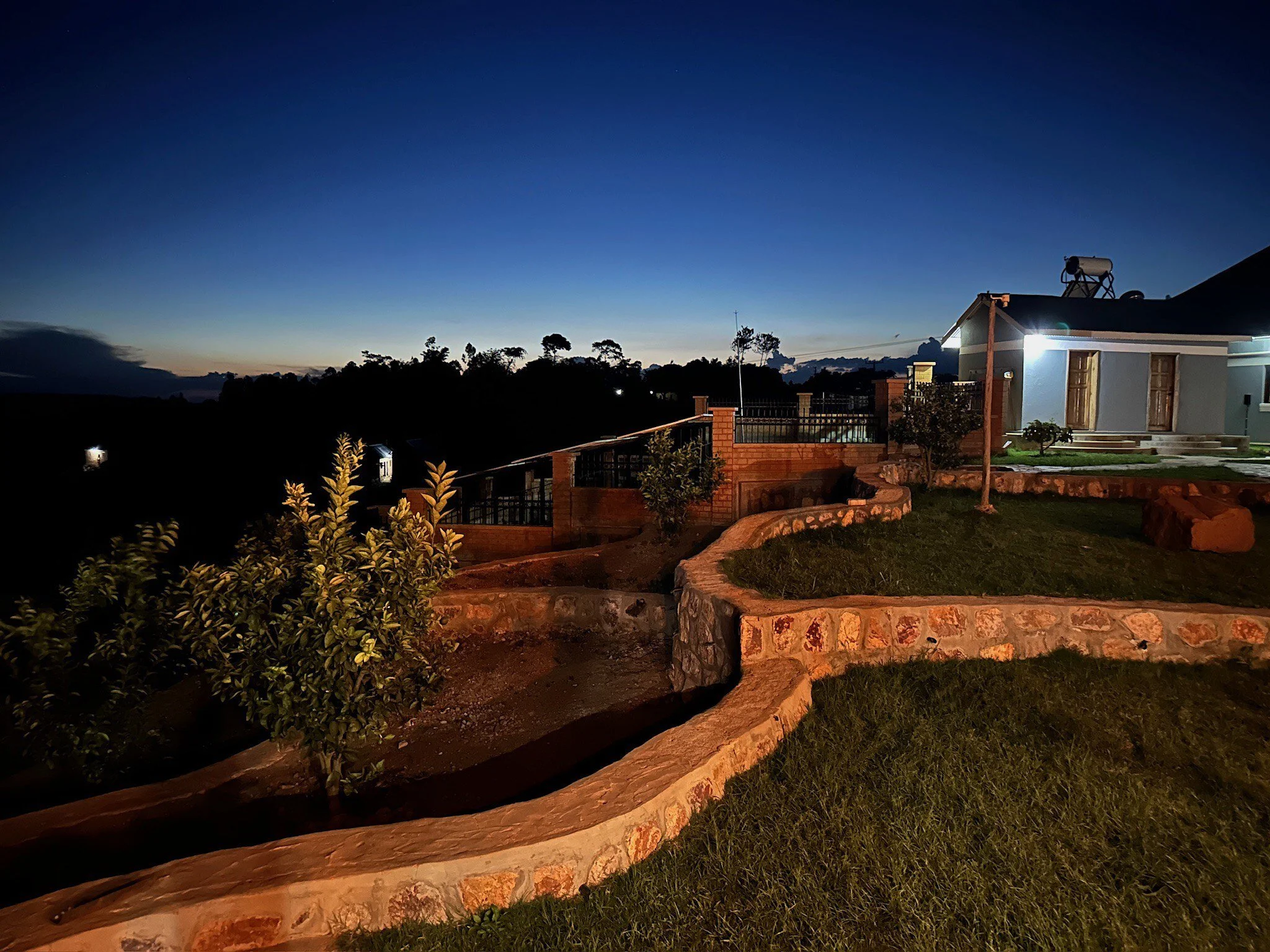
This was a season of growth at the Hope Centre campus in Uganda, and our one little building has now grown to include The Birthplace, Banda Lodge, the Pavilion, a power room for the solar-powered electrical system, and a comprehensive water system.
All water at the center is collected from rain water, stored in 30,000 liter cistern (7,900 gal) and a 40,000 liter cistern (10,500), and two above ground storage tanks of 10,000 liters (2,642 gal) total of 20,000 liters (5,300 gal) each. For a total system storage capability of 23,700 gal).
Our water system uses solar power to pump the water to 45 psi (3bar) at 3,000 liters per minute (792 gal/min) and filters remove 99.98% impurities leaving the tap water safe to drink.

WATER & solar SYSTEMs
As Ray of Hope grew, we found that there was a need to improve our essential infrastructure. Most importantly, we knew that in order to have a safe, clean medical clinic for mothers to birth, we needed to find solutions to the water and electricity challenges that are common for rural Uganda. We collect rainwater from all of the roofs and store it in two in-ground cisterns, pump it to an above-ground storage tanks and then filter it with a state-of-the-art filtration system that provides clean, drinkable water to the entire Hope Centre campus.
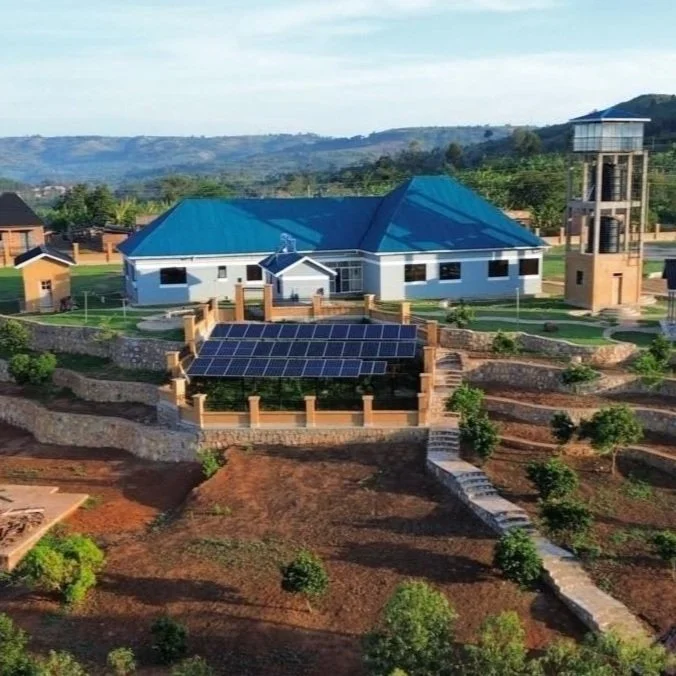
All the pumps are specifically designed to be used with solar electricity. We are connected to the national water system when it’s available, but utilities in this part of the country are unreliable.
The electricity is provided by a state of the art solar system with collection and storage of electricity for all of the operations. As of now, we are still off grid in regards to electricity, but our solar-powered system provides the necessary electricity for adequate maternal and infant care, food refrigeration, and general electricity for campus operations.

INVESTING IN THE LOCAL ECONOMY
Our mission is to inject Hope, Love, and Peace to all the places we go and to all the people we meet.
With this goal in mind, we knew that the construction of our campus was an opportunity to create jobs for local men looking for work.
The construction of our campus - minus the single original building - has all been lead by Henry Mutebi, a Western-trained Ugandan general contractor who specializes in hydro-form bricks.
These bricks are engineered using local labor and materials. They are concrete products that are compressed into uniform bricks that do not require mortar. This is what we’ve used to build all of our structures from the Banda Lodge, perimeter fence, and even the dog kennel.
Skilled laborers from all over Uganda come to work with Henry. The teams working often bring in local unskilled laborers as well who are looking for work, creating a healthy balance of skilled and unskilled.
All workers who come to work on the Hope Centre projects are paid fairly.
Workers live, work, and eat in the village during construction, providing further economic stimulus to the local economy.

JOIN THE
RAY OF HOPE
FAMILY
Join us in our mission to spread hope and make a difference in the lives of others. Let's build a more Hopeful tomorrow, together.